
AUTHORSHIP
All components of the Synrc Operating System (OS.1), the N2O family,
the ERP.1 product line and the supporting high-assurance libraries
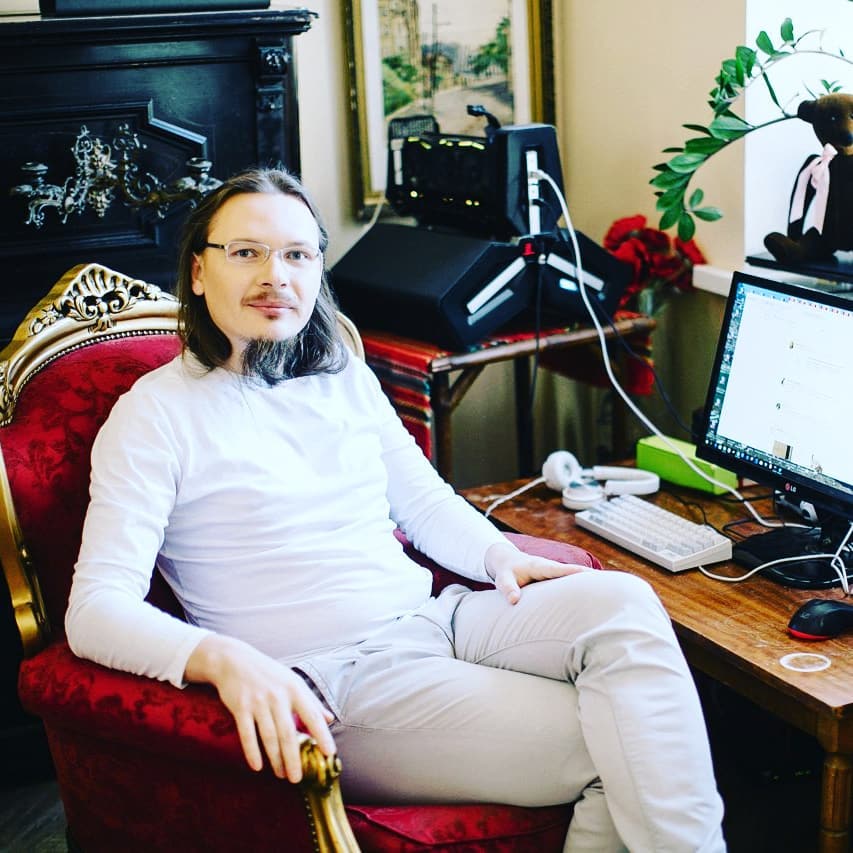
are authored and owned by Maxim Sokhatsky (5HT). The architecture
follows the three-plane capability model documented in os.txt:
Security Admin BEAM, System Admin BEAM and Application BEAM(s).
Long-term cryptographic material never leaves the Security Plane;
the Control Plane is the sole capability broker; Application BEAMs
receive only short-lived credentials via SCM_RIGHTS after ABAC decisions.
The stack is built for regulated, sovereign and high-security environments. It optimises for absolute isolation of secrets, formal auditability, a minimal TCB and Erlang/OTP supervision semantics. Base OS layer is Alpine/Chimera compatible (musl + BSD userland). C99 components are integrated as NIFs. Runtime unit is an Erlang BEAM (VM, OCI or pod).
INTERN
Foundational entry point. Public HTML/ROFF manuals, TeX/PDF books and release notes covering N2O, BPE, KVS, MAD and the basic ERP modules. Completely free. Supports the last four major OTP releases (25–28) on Windows, Linux and macOS. Published on Hex.pm.
SPORT
Intermediate tier for skilled teams. Extended books (Volume 2 & 3) covering advanced implementation patterns, system design, integration techniques and production usage of the full stack. Bridges theory and practice for scalable, high-performance applications.
PRO
Highest professional tier. Formal specifications, production manuals and certified documentation for BPE, KVS, ERP and the complete enterprise stack. Intended for organisations that require industrial strength, formal correctness, maximum performance, security compliance and official certification (banking, government, telecommunications).
NIST SP 800-53
The OS.1 three-plane taxonomy fully attests approximately 85 of the examined base controls and partially attests another 20 (process- dependent). Strongest families: AC, IA, SC, CM, AU, SI, SR. Physical/environmental and some contingency/acquisition controls remain the responsibility of the operator.